
Bảng quảng cáo
Moc Bai Dining Table, Xa Mat Dining Table

The dining table is an indispensable part of every family, especially in areas with rich cultural identities such as Moc Bai and Xa Mat. This article will provide detailed information about dining tables in these two areas, including features, benefits, production processes and things to keep in mind when choosing a dining table suitable for your living space.
Introduction to Moc Bai dining table
Concept of Moc Bai dining table
Moc Bai dining table is a typical furniture product of the southwestern border region, specifically the Moc Bai border gate area, Tay Ninh province. This type of dining table is made from natural wood, usually cam xe wood, cam lai wood or go do wood – precious woods originating from the Central Highlands old forests or imported from Cambodia.
The role of Moc Bai dining tables in local culinary culture
Moc Bai dining tables are not simply a piece of furniture, but also play an important role in the culinary culture and family life in the Southwest border area. First, it is a gathering place for family members, creating a space for bonding and sharing after a hard day’s work. In local culinary culture, Moc Bai dining tables are often used to serve typical border region dishes such as rice paper exposed to dew, sour snakehead fish soup, grilled snakehead fish, or Vietnamese – Khmer fusion dishes. The spacious size of the dining table allows for the display of many dishes at the same time, suitable for the communal dining style of local people. In addition, Moc Bai dining tables are also the place where many traditional cultural activities take place. During holidays, weddings or funerals, the dining table becomes the center of important ceremonies. For example, during Tet, Moc Bai dining tables are often used to display fruit trays and place incense bowls to worship ancestors. Moc Bai dining tables also reflect the cultural characteristics of the border region. With a simple, sturdy design, it shows the rustic, straightforward character of the people here. At the same time, the use of precious wood also shows respect for the natural resources and traditional craft skills of the locality.
Why choose Moc Bai dining table
High quality and durability
Moc Bai dining table is famous for its outstanding quality and durability. This comes from the use of precious woods such as cam xe, cam lai or go do – types of wood with high hardness, good resistance to weather and insects. The production process of Moc Bai dining table is also carried out carefully and meticulously. The wood is carefully selected, through a proper drying process to ensure the right humidity, avoiding warping after use. The joints are made using traditional mortise and tenon techniques, increasing the durability and aesthetics of the product. In addition, the surface of Moc Bai dining table is often treated with high-quality wood protection paints or oils, helping to increase water resistance, scratch resistance and prolong the life of the product. With proper care, a Moc Bai dining table can be used for decades, even passed down from generation to generation.
Unique aesthetics
Moc Bai dining tables bring a unique aesthetic value, combining the natural beauty of wood and the sophisticated crafting techniques of local artisans. Each table is a separate work of art, with unique wood grain and eyes, creating uniqueness for each product. The design of Moc Bai dining tables is often simple but sophisticated, suitable for many different interior styles. From traditional to modern styles, from townhouses to villas or resorts, Moc Bai dining tables can blend in naturally and create impressive highlights. The natural color of wood, from light yellow brown to dark reddish brown, is also an important aesthetic element of Moc Bai dining tables. These warm colors help create a friendly, intimate dining space, while bringing a sense of luxury and class to the home.
Cultural and traditional values
Choosing a Moc Bai dining table is not only choosing a piece of furniture, but also a way to preserve and promote the cultural and traditional values of the borderland. Each dining table is the crystallization of traditional woodworking techniques, passed down from generation to generation by local artisans. Using a Moc Bai dining table is also a way to support the local economy, especially traditional craft villages. This contributes to maintaining people’s livelihoods, while encouraging the development and innovation of traditional crafts. In addition, the Moc Bai dining table also has profound cultural significance. It is a symbol of family unity, warm meals and intimate conversations. In modern society, when time for family is increasingly scarce, a Moc Bai dining table can be a fulcrum to bring family members closer together.
Introduction to Xa Mat dining table
Concept of Xa Mat dining table
Xa Mat dining table is a typical furniture product of Tay Ninh border area, specifically Xa Mat border gate area. This type of dining table is made from local wood or wood imported from Cambodia, usually rosewood, huong wood or cam xe wood. Xa Mat dining table stands out with a simple but sophisticated design, combining traditional and modern style. Usually rectangular or square in shape, Xa Mat dining table is often designed with a thick table top, sturdy table legs, creating a feeling of stability and luxury. 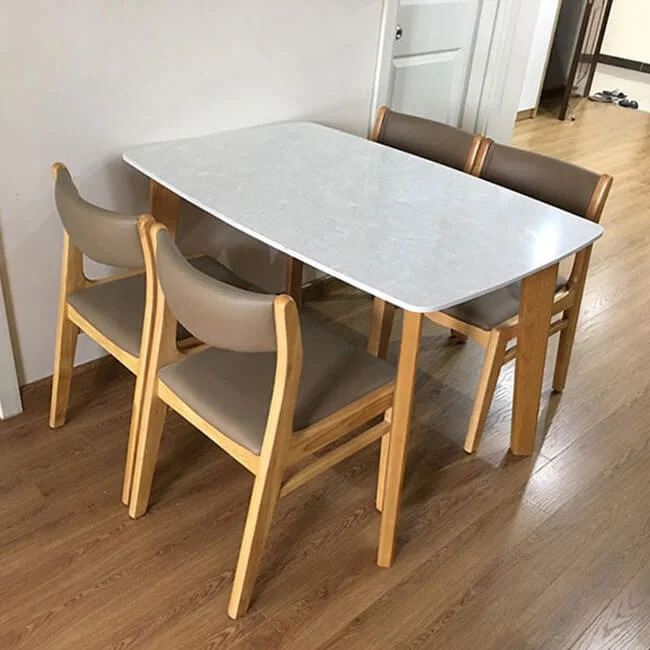
The role of Xa Mat dining tables in modern life
Xa Mat dining tables play an important role in the modern life of people in border areas and are increasingly popular in big cities. First, it is the center of the kitchen and dining room space, where families gather, share meals and chat after a day of work. In the trend of modern interior design, Xa Mat dining tables are often used as a highlight, harmoniously combining traditional beauty and contemporary style. Many families choose Xa Mat dining tables not only for their functionality but also for the aesthetic and cultural values they bring. Xa Mat dining tables also play an important role in preserving and promoting traditional cultural values. Through the use of this dining table, users contribute to maintaining traditional crafts, while creating a bridge between the past and the present in the living space. In addition, in the context of globalization, Xa Mat dining tables are also a way to affirm local cultural identity. Many people choose to use Xa Mat dining tables as a way to express pride in their origins and traditions.
Why choose Xa Mat dining tables
Multifunctionality and flexibility
Xa Mat dining tables stand out with their high versatility and flexibility, suitable for many different spaces and purposes. With a simple but sophisticated design, Xa Mat dining tables can be easily combined with many interior styles, from traditional to modern, from simple to luxurious. Many Xa Mat dining table models are designed with the ability to expand or collapse, suitable for the flexible living space of modern life. For example, some table models can be extended to serve large parties, or collapsed to save space when not in use. In addition to the main function of a dining table, many products can also be used as a desk, study table, or even a display table in the living room. This increases the value of the product, especially suitable for living spaces with limited area.
Combination of traditional and modern
One of the reasons why Xa Mat dining tables are increasingly popular is the harmonious combination of traditional and modern elements. While still retaining the beauty and traditional crafting techniques, Xa Mat dining tables are also designed to meet the needs and aesthetics of modern life. In terms of design, Xa Mat dining tables often have simple, neat lines, suitable for modern interior trends. However, traditional carvings are still delicately retained, creating a unique product. In terms of technology, the production process of Xa Mat dining tables combines traditional manual techniques and modern technology. This ensures that the product retains its traditional beauty while achieving high precision and durability. This combination not only creates products with high aesthetic value but also has profound cultural significance. It shows respect for tradition, while demonstrating the ability to adapt and develop in the new era.
Support the local economy and preserve traditional crafts
Choosing to buy a Xa Mat dining table is a direct way to support the local economy and contribute to preserving traditional crafts. The woodworking industry in general and dining tables in particular have been and are one of the important industries in the Xa Mat area, creating jobs for many local people. By choosing to buy Xa Mat dining tables, consumers are indirectly supporting local artisans and craftsmen, helping them maintain their livelihoods and continue to develop traditional crafts. This is especially important in the context of globalization, when many traditional crafts are at risk of disappearing. In addition, the production of Xa Mat dining tables also contributes to the development of local supporting industries, from wood exploitation and processing to the production of accessories and finishing materials. This creates a significant economic value chain for the region.
Moc Bai and Xa Mat dining table production process
Wood selection and processing
The production process of Moc Bai and Xa Mat dining tables begins with the selection of wood. Commonly used woods include rosewood, rosewood, red wood (for Moc Bai dining tables) and rosewood, huong wood, and rosewood (for Xa Mat dining tables). The selected wood must ensure appropriate age, hardness and durability. 
Design and processing
After the wood has been treated, the next step is design and processing. For Moc Bai dining tables, the design is often simple with rustic lines, preserving the natural beauty of the wood. Meanwhile, Xa Mat dining tables can have more complex designs, with sophisticated carvings. The processing process includes cutting the wood to the design size, shaping the details, and joining the table parts. For Moc Bai dining tables, traditional mortise and tenon techniques are often used to create product durability. Xa Mat dining tables can combine traditional techniques and modern technology to create complex details. During the processing, artisans also carve and sculpt decorative motifs (if any) on the table. This is a stage that requires high skill and meticulousness, contributing to the artistic value of the product.
Finishing and quality control
The final step in the production process is finishing and quality control. The table surface is carefully treated by sanding to create smoothness, then covered with paint or wood protection oil. For Moc Bai dining tables, natural wood protection oil is often used to preserve the beauty of the wood. Xa Mat dining tables can use high-quality paints to increase gloss and scratch resistance. After finishing, each product undergoes a rigorous quality control process. Factors such as the strength, flatness of the table top, smoothness of the surface, color and wood grain are all carefully checked. Only products that meet the standards are brought to the market.
Conclusion
Moc Bai dining tables and Xa Mat dining tables are not only simple pieces of furniture, but also symbols of the culture, tradition and craftsmanship of the southwestern border region. With high quality, unique aesthetics and profound cultural values, they are increasingly popular not only locally but also nationwide. When choosing to buy Moc Bai or Xa Mat dining tables, consumers not only own a quality product but also contribute to preserving and promoting traditional values, while supporting the local economy. In the context of globalization and modernization, maintaining and developing products with strong cultural identity such as Moc Bai and Xa Mat dining tables is extremely necessary and meaningful. With a harmonious combination of tradition and modernity, Moc Bai and Xa Mat dining tables promise to continue to develop and dominate the market in the future, not only as a piece of furniture but also an indispensable part of the cultural and spiritual life of Vietnamese people.
Geta group:
Introduction Website: cuonggeta.com Zalo: 0919.511.911 Tele: @cuonggeta2


