
Bảng quảng cáo
Moc Bai Stone Chair, Bavet Stone Chair

Moc Bai stone chairs, Bavet stone chairs. Important outdoor furniture products, especially in strategic areas such as Moc Bai – the international border gate connecting Vietnam and Cambodia. This article will provide detailed information about stone chairs in Moc Bai and Bavet, the benefits, production process and things to note when choosing and using stone chairs in this border area.
Introduction to Moc Bai stone chairs
Concept of Moc Bai stone chairs
Moc Bai stone chairs are a type of outdoor chair made from natural or artificial stone, often used in public areas, parks, campuses and tourist attractions in the Moc Bai border gate area. Moc Bai stone chairs come in many different designs and sizes, from simple chairs to complex Moc Bai stone chairs, Bavet stone chairs with accompanying tables. :
The role of Moc Bai stone benches in urban landscape
Moc Bai stone benches play an important role in creating the urban landscape in Moc Bai. First, they provide resting space for residents and visitors. Placed in strategic locations such as parks, squares or along streets, Moc Bai stone benches create ideal resting places, contributing to increasing the friendliness and convenience of public spaces. Second, Moc Bai stone benches have the ability to create aesthetic highlights for the landscape. With diverse designs and natural materials, Moc Bai stone benches can naturally blend in with the surrounding environment, while creating interesting highlights for the space. Moc Bai stone benches also play an important role in creating a space for community exchange. By providing comfortable seating, Moc Bai stone benches encourage people to gather, chat and enjoy public spaces, contributing to strengthening community connectivity. In addition, Moc Bai stone benches also have the ability to reflect local culture and history. In Moc Bai, Moc Bai stone benches can be designed with traditional motifs of the Southeast region or bearing the mark of the Vietnam – Cambodia border region, contributing to promoting local culture to visitors. Finally, in the context of rapid urbanization, Moc Bai stone benches still maintain their important role. While many elements of the urban landscape may change, the Moc Bai stone bench remains an integral part of public space, ensuring that residents and visitors always have a place to rest and enjoy their surroundings.
Why use Moc Bai stone bench
Strategic geographical location
Moc Bai is an international border gate located in Tay Ninh province, Vietnam, bordering Prey Veng province of Cambodia. This special geographical location brings many advantages to the use of stone benches here. First, Moc Bai is one of the most important border gates on the Vietnam – Cambodia border, with a large daily traffic of people and vehicles. This creates a great demand for public resting spaces, and stone benches are an ideal solution to meet this need. Second, Moc Bai’s location is on the route connecting two major economic centers, Ho Chi Minh City (Vietnam) and Phnom Penh (Cambodia). This means that the stone benches here serve not only local people but also those who travel between the two countries for business or tourism purposes. In addition, Moc Bai is also a border economic zone, where many commercial and service activities are concentrated. The arrangement of stone benches in public areas not only creates favorable conditions for people and tourists to rest but also contributes to creating a civilized and friendly urban environment.
Demand for using Moc Bai stone benches
The demand for using Moc Bai stone benches is very diverse and has great potential. First, as an international border gate, Moc Bai has a high demand for public resting areas for people and tourists. Moc Bai stone benches can be arranged in waiting areas, parks, and along main streets to meet this demand. Second, Moc Bai is a destination for many tourists, especially those who want to experience “cross-border tourism”. Moc Bai stone benches can be used to create interesting stops where visitors can rest, sightsee and take photos. 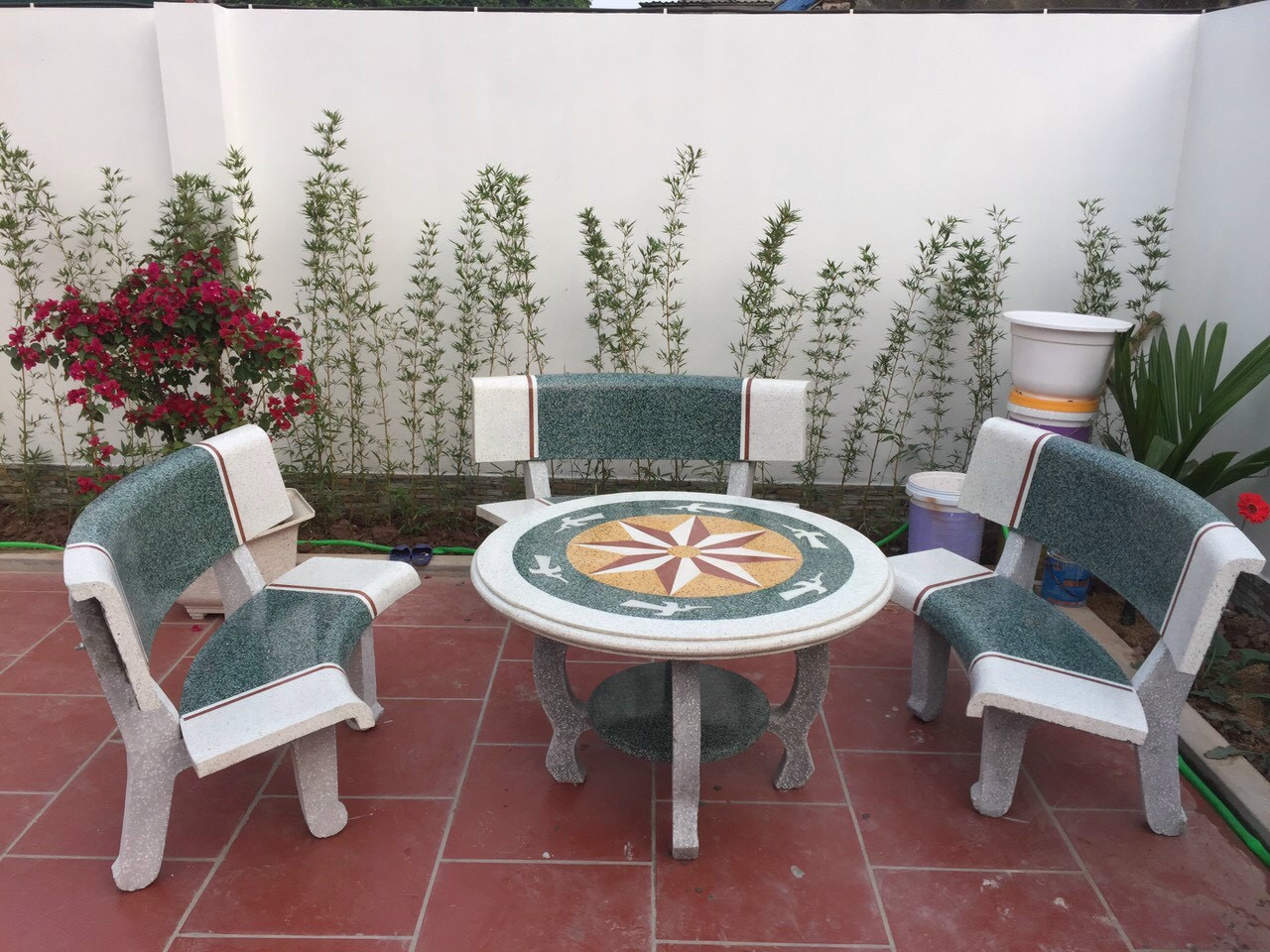
Benefits of Bavet stone benches
Current status of using Bavet stone benches
Bavet, a Cambodian border city bordering Moc Bai, is also witnessing a rapid growth in the use of public Moc Bai stone benches. In recent years, the urban landscape of Bavet has improved a lot, reflecting the economic growth and urbanization of this area. Outdoor Moc Bai stone benches are becoming an important part of the urban landscape in Bavet. In public areas such as parks, squares and along main streets, Moc Bai stone benches are widely used to provide resting space for residents and visitors. However, the use of Bavet stone benches is also facing some challenges. First is the lack of synchronous planning and design, leading to unreasonable arrangement of Moc Bai stone benches in some areas. Second, the quality and durability of some types of Moc Bai stone benches are limited, not meeting the needs of long-term use in the harsh weather conditions of the area. However, with the development of technology and awareness of the importance of public spaces, Bavet is also witnessing the emergence of more modern and multi-functional Moc Bai stone benches. This opens up many new opportunities for improving the urban landscape and enhancing the quality of life for people here.
Advantages of Bavet stone benches
Bavet stone benches have many outstanding advantages, contributing to the attractiveness and convenience of public spaces in this border area. High durability: Bavet stone benches are made from high-quality stones, capable of withstanding the harsh weather conditions of tropical regions. This helps reduce maintenance and replacement costs, while ensuring long-term aesthetics for the urban landscape. Diverse in design: Bavet stone benches come in many different designs, from simple, modern designs to models imbued with traditional Khmer culture. This diversity helps meet many different aesthetic and functional needs. Environmentally friendly: Using natural materials, Bavet stone benches contribute to creating a green and sustainable space. They not only blend in with the natural landscape but can also be recycled or reused, minimizing the impact on the environment. High flexibility: Bavet stone benches can be used in many different spaces, from parks, squares to waiting areas at border gates. This flexibility helps optimize the use of public spaces. Good load-bearing capacity: With a sturdy structure, Bavet stone benches have a high load-bearing capacity, suitable for use in areas with high traffic such as Bavet border gates. G
Bavet stone chair production process
The Bavet stone chair production process usually goes through the following steps:
- Material selection: Natural or artificial stone is carefully selected based on quality and characteristics suitable for local weather conditions.
- Design: Chair models are designed by local artisans or design experts, combining aesthetics and functionality.
- Cutting and shaping: Stone is cut and shaped according to design drawings using specialized tools.
- Carving and finishing: If necessary, decorative details will be carved on the chair surface. The surface is then polished and treated to increase durability.
- Assembly: The chair parts are assembled together (if necessary).
- Quality control: Each product is thoroughly inspected to ensure it meets quality and safety standards.
- Transportation and installation: Bavet stone chairs are transported to the site and installed according to the plan.
Selection and maintenance of Bavet stone chairs
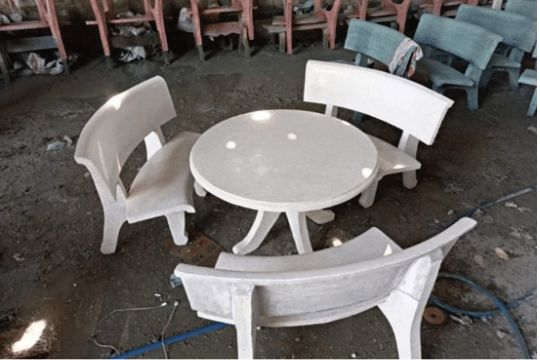
- Stone quality: You should choose a type of stone that is hard and has good weather resistance.
- Suitable design: Choose a style that is suitable for the space and purpose of use.
- Size: Make sure the chair is the right size for the user and the installation space.
- Safety: Check the edges and corners of the chair to ensure the safety of the user.
To maintain a Bavet stone chair, the following measures must be taken:
- Regular cleaning: Clean the chair surface with water and mild detergent.
- Inspection and repair: Regularly check for cracks or damage and repair promptly.
- Surface protection: Use stone protection chemicals to increase durability and water resistance.
- Move carefully: When moving the chair, use appropriate means and techniques to avoid damage.
Development trends of stone chairs in the border area
In the future, the development trends of stone chairs in the Moc Bai – Bavet border area may include:
- Integration of technology: Smart stone chairs integrate features such as phone charging, Wi-Fi, or environmental sensors.
- Multifunctional design: Stone chairs combined with other utilities such as tables, bicycle racks, or trash cans.
- Use of sustainable materials: Enhance Use recycled stones or environmentally friendly materials.
- Design reflects local culture: Increase the use of cultural motifs and symbols of both Vietnam and Cambodia in the design of stone benches.
- Modular stone benches: Design stone bench sets that can be disassembled and flexibly arranged according to usage needs.
Conclusion
Moc Bai stone benches and Bavet stone benches play an important role in creating urban landscapes and improving the quality of life in this border area. With many advantages and development potential, stone benches are not only part of urban infrastructure but also a symbol of cultural exchange and sustainable development in the international border gate area. In the future, with the combination of technology and creative design, stone benches in Moc Bai and Bavet will continue to develop, meeting increasingly better needs.
GETA GROUP Thông tin liên hệ: Website: cuonggeta.com Phone/ Zalo: 0919.511.911 Tele: @cuonggeta2


